
Which Garner Records Stay Open
Garner sits inside a layered public records system. The Town Clerk keeps town business, while Wake County holds the main land, tax, court, estate, voter, and local vital-event files. State agencies run the widest court, corrections, business, and certificate systems. A search result is often just an index. The custodian still controls inspection, copies, certification, and any lawful redaction.
| Record set | Keeper | Online route | Public access |
|---|---|---|---|
| Deeds, liens, plats | Wake Register of Deeds | ROD Self-Service | Public index; image and certified-copy terms vary |
| Property and tax bills | Wake Tax Administration | Real Estate Search; tax bills from 1994 | Free web search, phone, or email fallback |
| Court cases and estates | Wake Clerk of Superior Court | Statewide eCourts Portal | Public docket and some documents; clerk terminal and copies |
| Birth, death, marriage, divorce | Wake ROD, Wake Clerk, NC Vital Records | Order channels and archival indexes | Certificate entitlement and identification rules apply |
| Municipal permits and files | Garner departments | Portal varies by filing date | Chapter 132 request, department, email, phone, or counter |
| Custody and registries | Wake Sheriff, NCDAC, SBI | Agency-specific lookups | Public statutory fields; investigations remain limited |
North Carolina does not make every government-held fact open. Adoption and juvenile files, sealed or expunged cases, protected investigative material, confidential personnel details, voter identifiers, motor-vehicle personal data, and Address Confidentiality Program information have statutory limits. A mixed file may still be released after the custodian removes exempt fields.
Chapter 132 Opens Garner Records
North Carolina Public Records Law defines records broadly when they are made or received in public business, whatever their physical form. The official Chapter 132 text states that a requester generally need not live in North Carolina or explain a purpose. Inspection and copies must be available at reasonable times under reasonable supervision.
The law says an agency must respond as promptly as possible. It does not impose one fixed number of days for every request. If part of a record is exempt, ask the custodian to cite the statute and release the nonconfidential portion. Chapter 132 permits civil enforcement in superior court and allows attorney fees in defined cases.
- Custodian
- The office or official responsible for the requested record.
- Index
- A finding tool that points to a record but may not reproduce the legal instrument.
- Certified copy
- A copy formally authenticated by its official keeper.
- Exemption
- A statute that withholds a record or field from general public access.
Note: A denial should identify the governing exemption, while an estimate should separate ordinary reproduction cost from any special service charge.
Garner Public Records Custodians
The record’s creator usually determines the correct desk. Garner Town Hall is the local counter for Council material, ordinances, contracts, board files, and municipal correspondence. Downtown Raleigh offices handle most Wake County fallbacks because Raleigh, not Garner, is the county seat. Published portals remain useful when travel is not practical.
Garner Town Clerk
900 7th Ave., Garner, NC 27529
919-772-4688
Town-created records and routing
Wake Register of Deeds
Land instruments and Wake vital events
ROD Self-Service
Wake Tax Administration
Assessment roll and tax bills
919-856-5400
taxhelp@wake.gov
Wake Clerk of Superior Court
Civil, criminal, estate, and special-proceeding files
Wake County courts and clerk access
The Wake County courts page shows the clerk and courthouse access point.
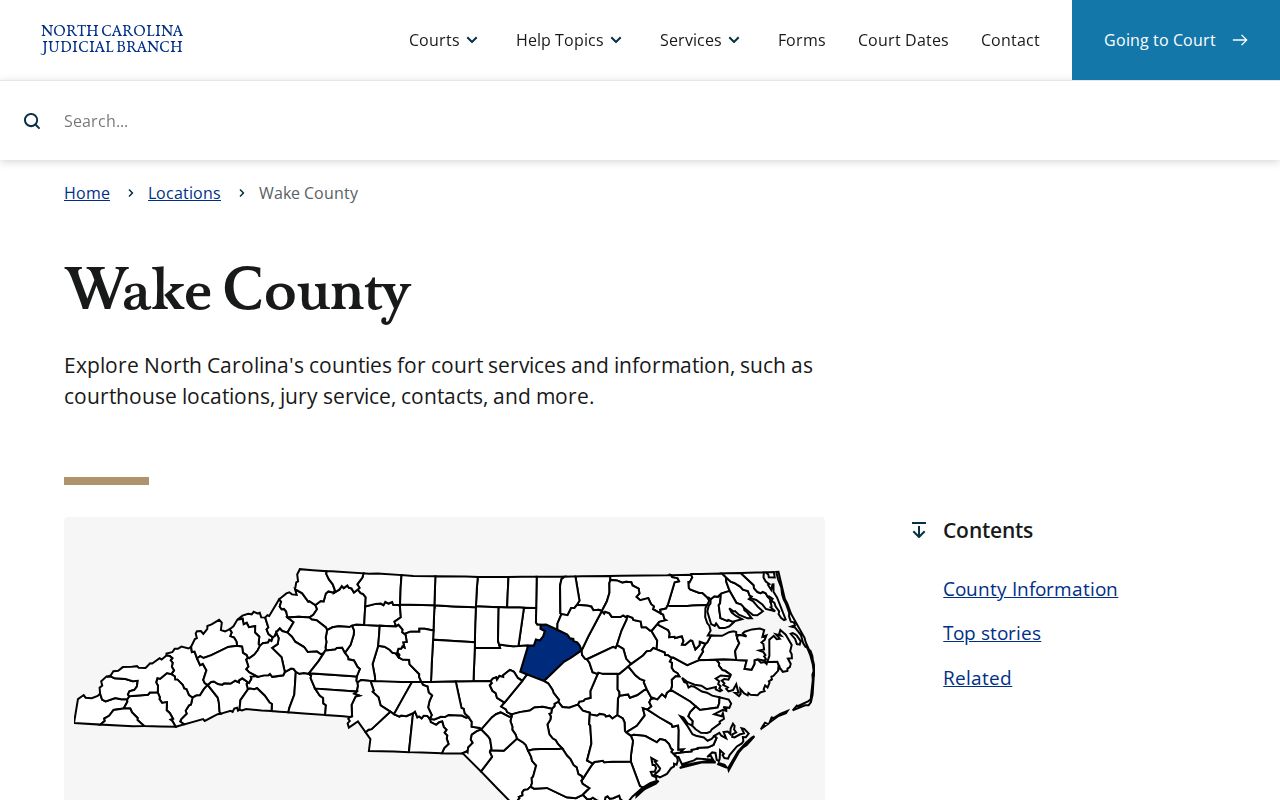
That office is also the fallback when an eCourts result lacks an older filing, a document image, or a copy certification.
Search Garner Deed Records
The Wake Register of Deeds calls its web index a guide much like a library card catalog. It is not a substitute for reading the recorded instrument. Search every reasonable spelling form, then compare parties, dates, document type, instrument number, and book and page. Wake’s deed books reach to the county’s formation in 1771, but the public landing page does not state a complete web-index start year.
| Field | Input | Required | How to use it |
|---|---|---|---|
| Party / Last Name | Text | Depends on mode | Try surnames, prior names, initials, and company-name variants |
| First Name | Text | No | Narrow a long party list |
| Instrument Number | Text | Mode dependent | Open a known recording directly |
| Book / Page | Paired text | Mode dependent | Retrieve a cited instrument |
| Document Type | Dropdown | No | Limit by deed, deed of trust, lien, satisfaction, plat, or other type |
| From / Through Date | Date pair | No | Limit the recording window |
The official Wake deed index opens with its conditions and search warning.
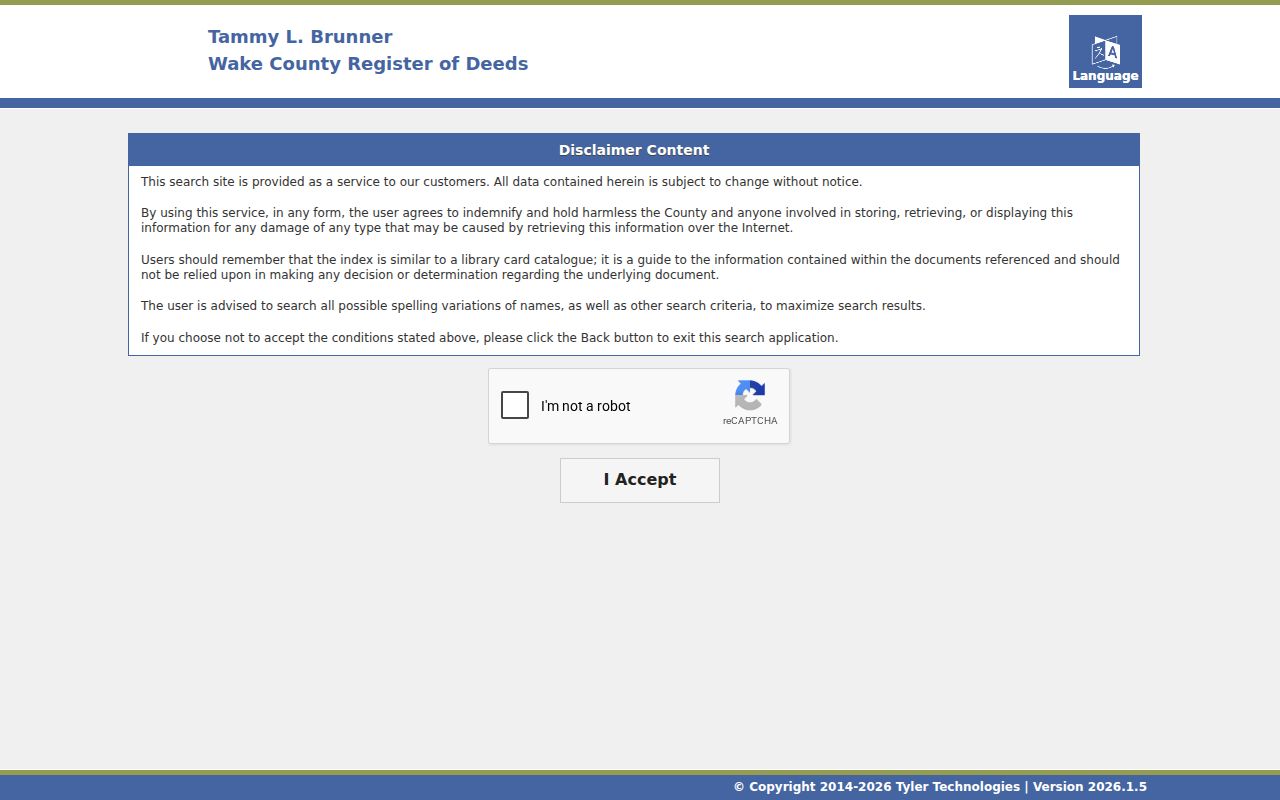
An indexed result can show party roles, instrument type, recording date, instrument number, and book/page. Use the office terminal or copy desk when older material, an image, or certification is not available online.
Start Garner Records with Parcel IDs
A common surname can flood the deed index. An address offers a cleaner route. Search the Wake assessment roll first and capture the exact owner, REID, PIN, and deed book/page. REID means Real Estate ID, while PIN is the parcel identification number. These keys connect Wake’s tax, map, and land-record systems with less risk of choosing the wrong person.
The Wake Real Estate Search accepts owner name, property address, REID, or PIN.
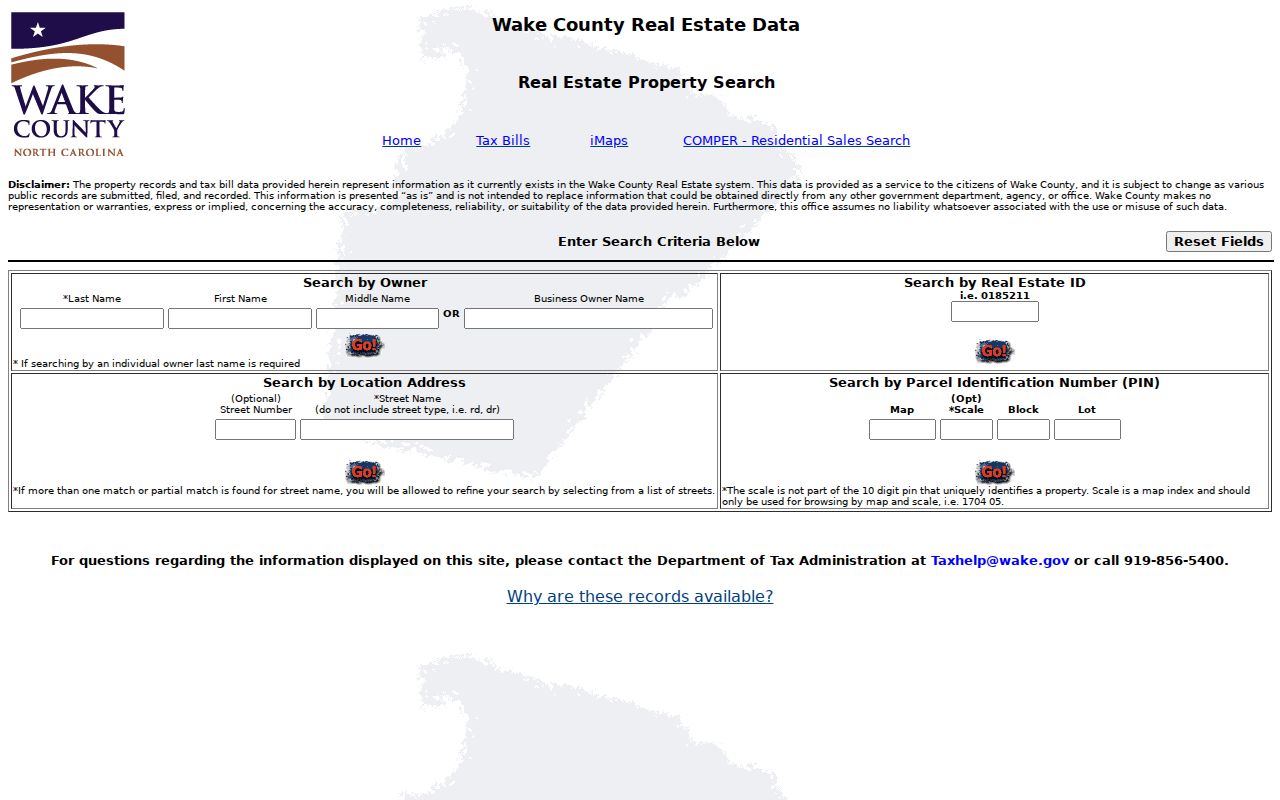
Its parcel card can distinguish the situs address, meaning the land’s physical location, from the owner’s mailing address. A different mailing address does not prove where the owner lives. Tax bill copies run from 1994 to the present and may be searched by owner, business name, or account number; phone and email are documented fallbacks.
Insider tip. Carry the REID or PIN and deed book/page into the Register of Deeds search before trying a broad name query.
Map Garner Records Jurisdiction
A Garner mailing address may sit outside the incorporated town. Postal place, community identity, and municipal boundary are different filters. Wake County’s parcel layer identifies the authoritative tax parcel and jurisdiction. Garner Planning and the town annexation map can then resolve whether the Town or a county office created a permit, code, or planning file.
The Wake County and Raleigh iMAPS viewer supports address, owner or parcel searching, map identification, and selectable parcel, jurisdiction, aerial, and planning layers.
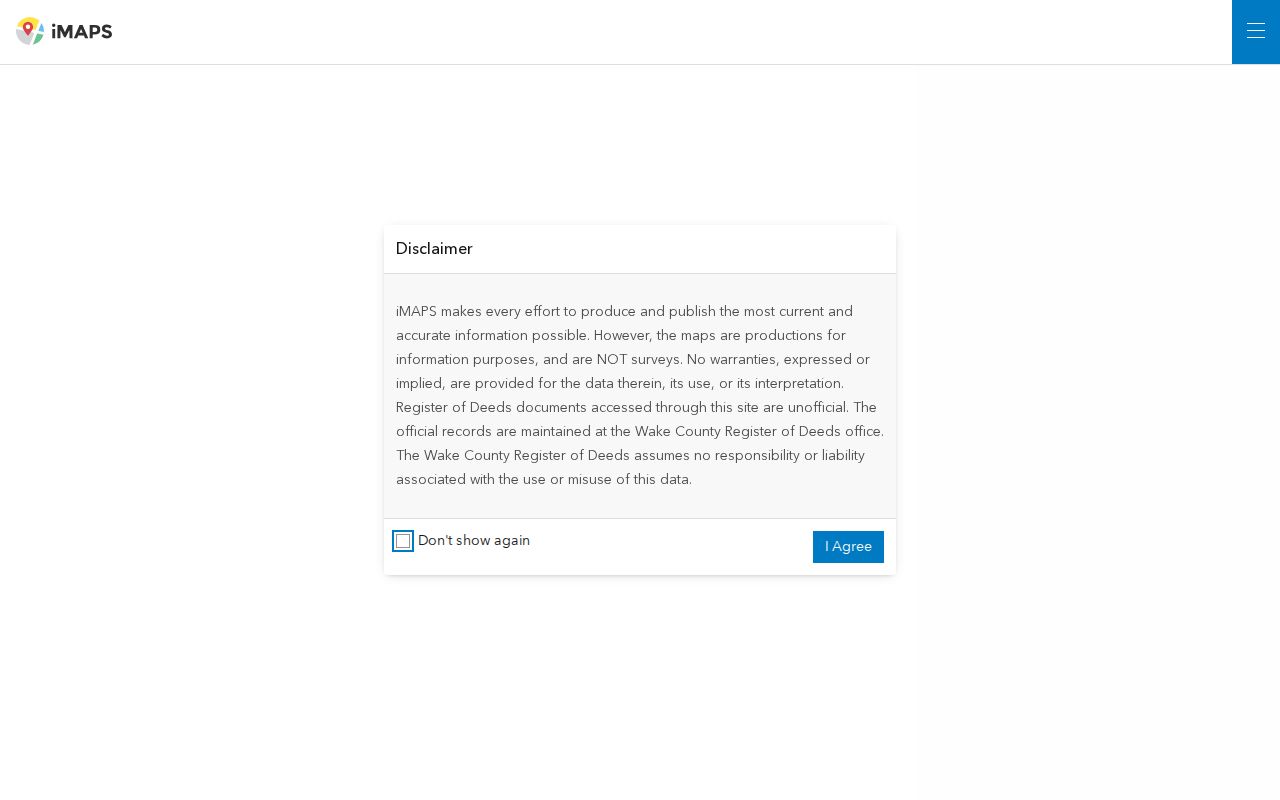
The map panel helps establish where land sits, but a cartographic print is not a certified survey or deed. Follow its PIN or REID to the tax card and recorded instrument.
Note: Annexation changes municipal tax and service responsibility but does not rewrite the Wake County chain of title.
Garner Court Records After Conversion
Wake District and Superior Courts serve Garner in Judicial District 10. The statewide eCourts Portal accepts party names, record numbers, citation numbers, attorney names or bar numbers, county, case category, and filing dates. A docket can show case number, style, court, filing date, status, parties, lawyers, events, charges, dispositions, judgments, and a register of actions.
All 100 counties completed the Enterprise Justice and Odyssey conversion on October 13, 2025, as documented in the Judicial Branch eCourts overview. The statewide eCourts search is now the main current index.
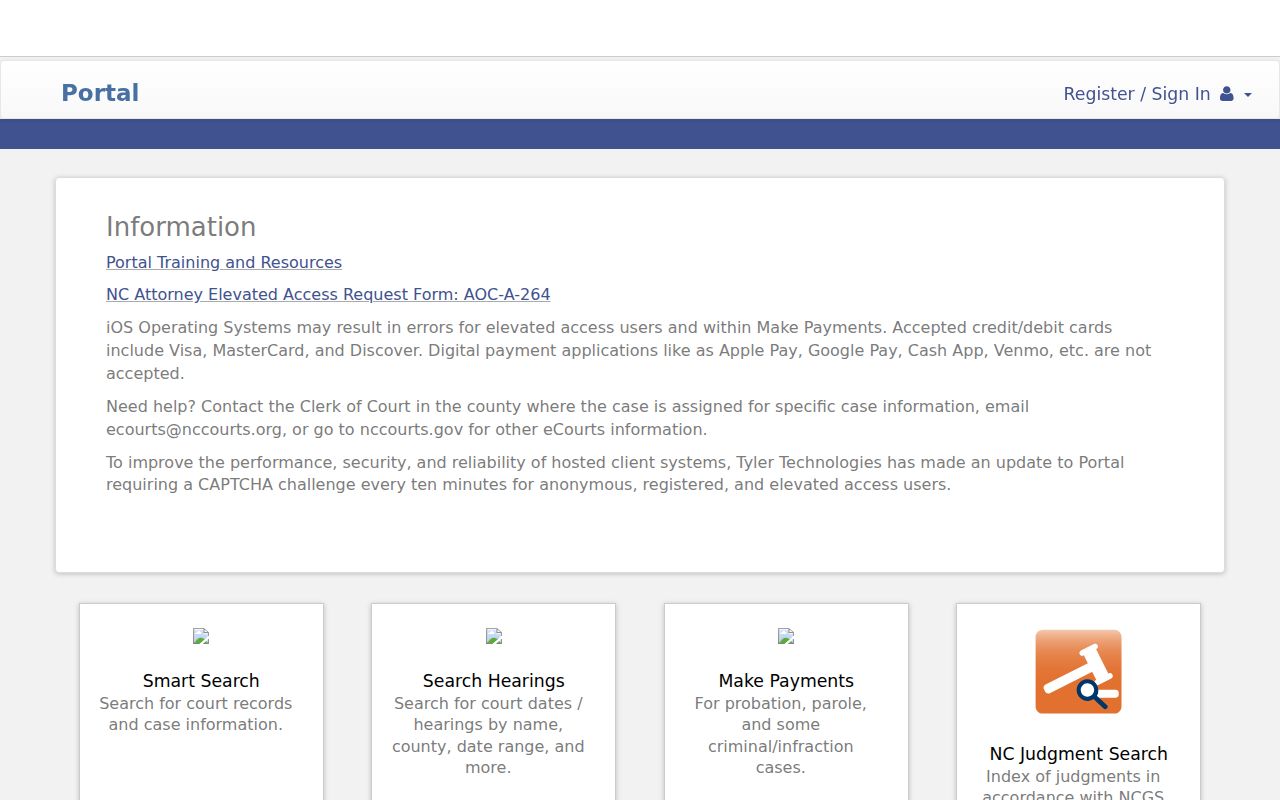
Online access does not make every filed page downloadable. The official Portal FAQ explains public and elevated access. Courthouse terminals and the Wake Clerk remain essential for legacy files, public documents absent from the web, and certified copies. Sealed, expunged, juvenile, adoption, and confidential domestic material stays outside ordinary public name searching. Federal cases for Garner fall in the Eastern District of North Carolina; PACER, the federal clerk, and archival retrieval are separate channels.
Garner Vital Records Have Limits
Vital certificates are not ordinary open records. N.C.G.S. §130A-93 governs access, and North Carolina does not use a simple rule that every certificate opens after a set number of years. Wake Register of Deeds issues eligible Wake birth, death, and marriage certificates. NC Vital Records handles statewide certificates, while divorce case files stay with the Wake Clerk. The North Carolina certificate-order page lists online, phone, mail, appointment, and county-register routes.
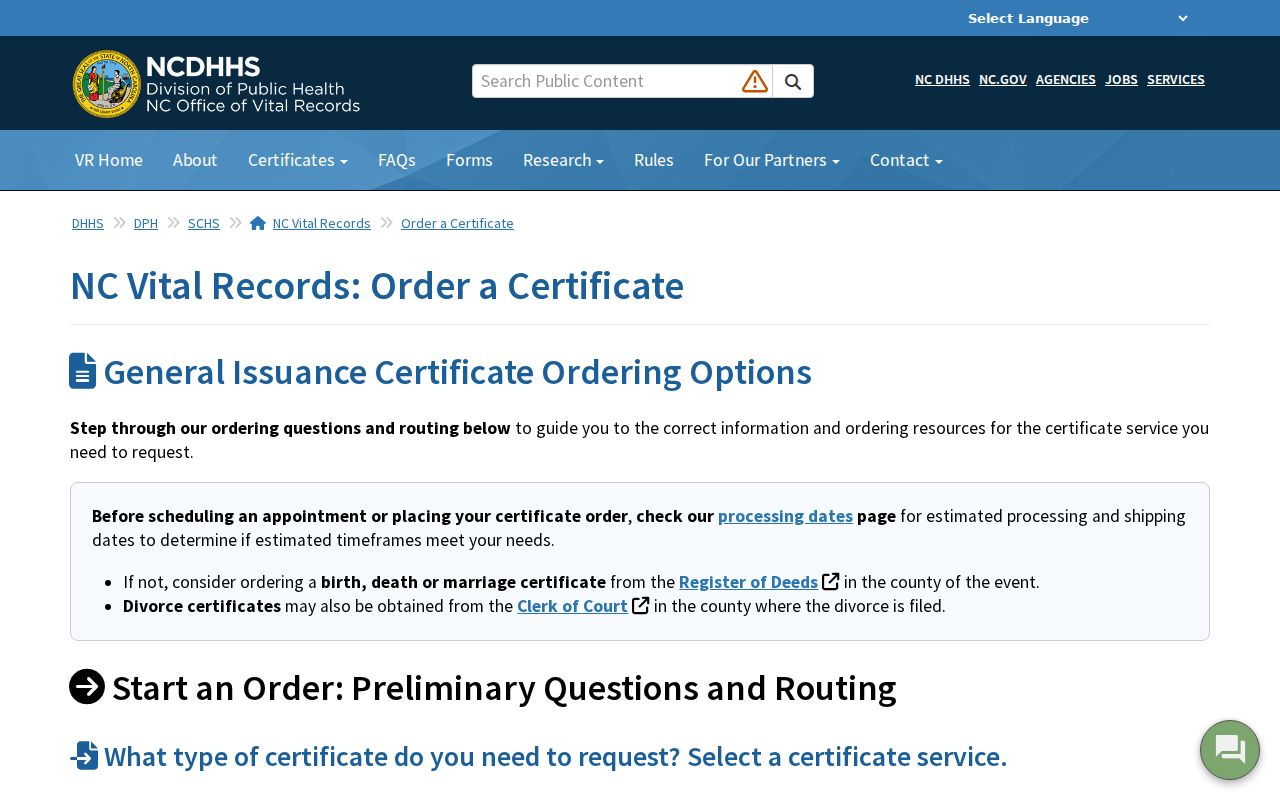
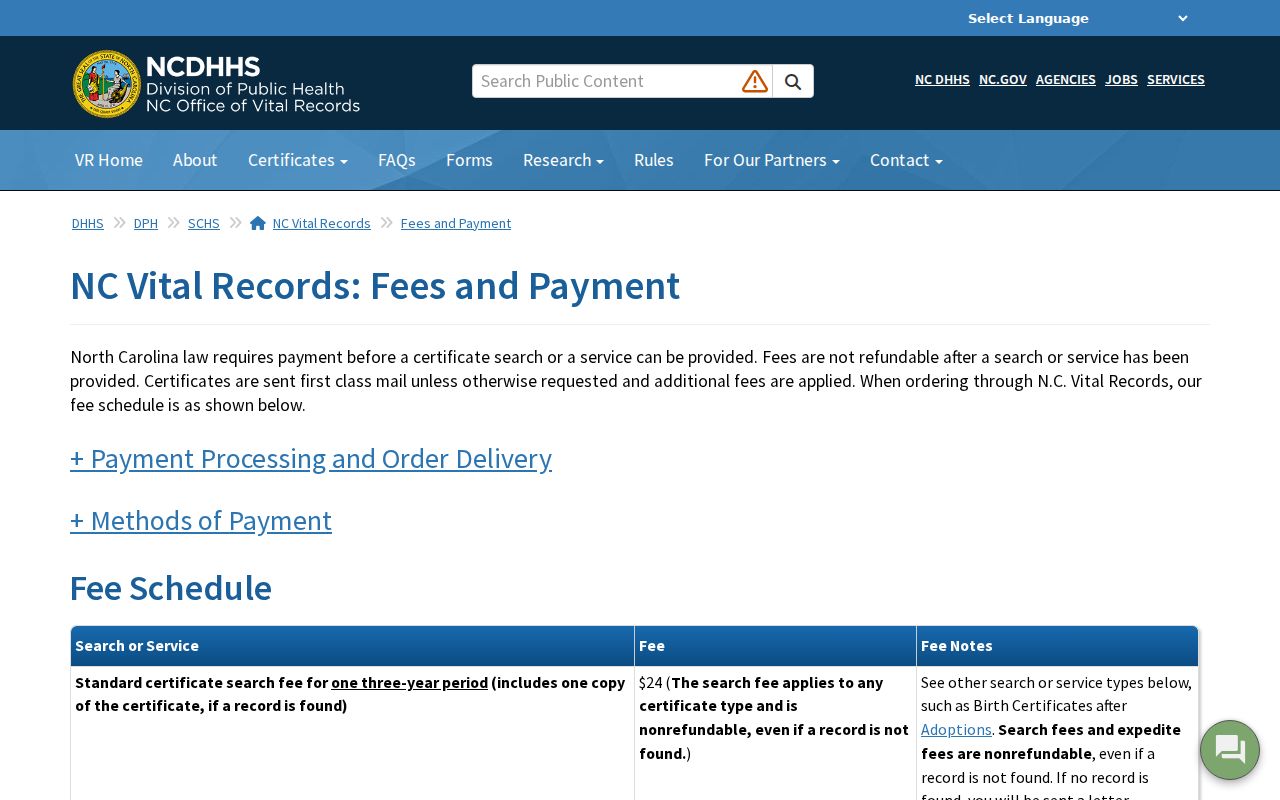
An application asks for the record facts, applicant identity, relationship or entitlement, identification, copy count, service, and payment. State service costs $24 for a search of one three-year period and the first copy if found. Each extra copy of the same certificate is $15, an amendment is generally $15, and eligible in-person expedite service adds $15.
The official state fee schedule separates those charges.
Historical indexes, newspapers, cemetery sources, county microfilm, and State Archives catalogs may reveal event facts without turning the underlying certificate into an unrestricted file.
Garner Offender Records Use Separate Systems
Custody, conviction, supervision, court, and registry data are not one record set. Wake detention information and VINE address current custody and notification. NCDAC covers people serving or formerly serving state sentences and people under community supervision. The SBI registry description covers only persons required to register, while a court case remains a separate Wake Clerk or eCourts record. The NCDAC Public Offender Search accepts names, offender numbers, and demographic filters.
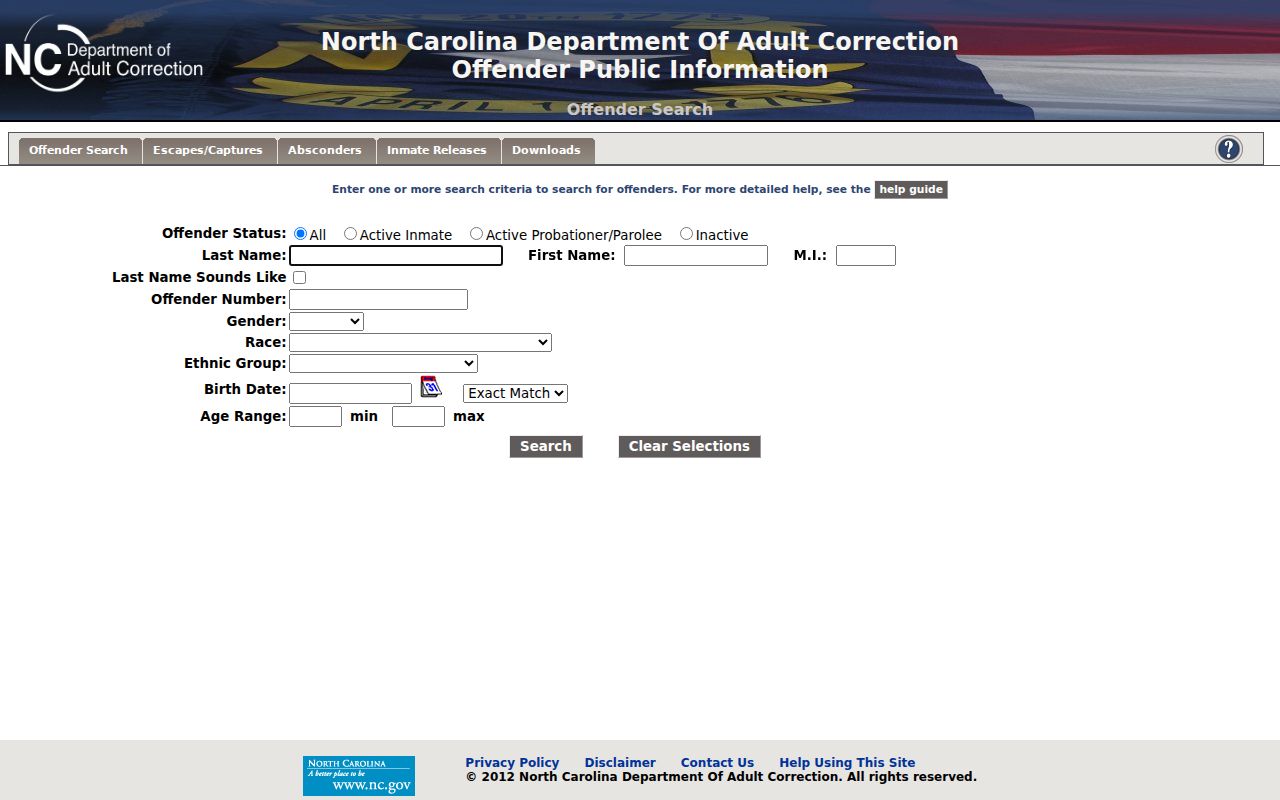
Its public result can report identity, status, conviction or sentence facts, location, and supervision, but it is not a list of every arrest.
The North Carolina Sex Offender Registry offers name, city or ZIP, address-radius, coordinates, and registration-number searching.
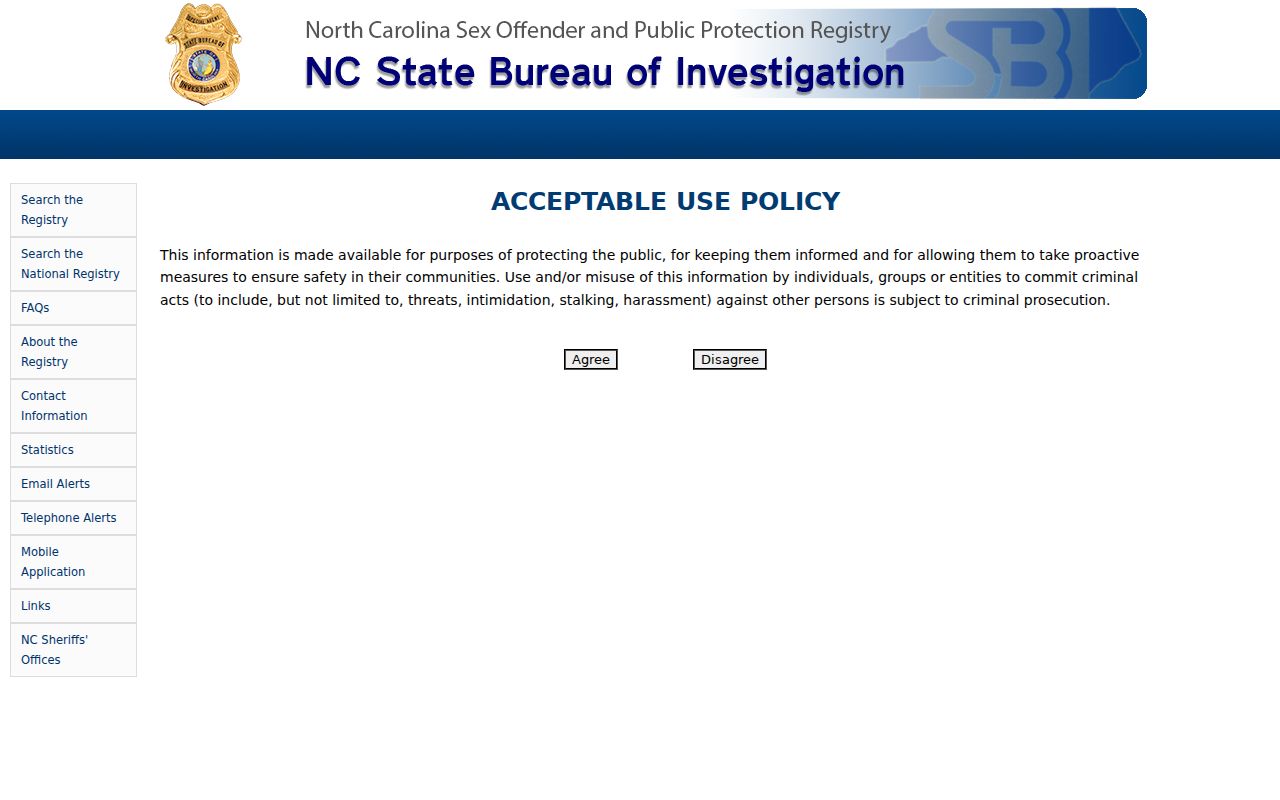
Registry information is for the public-safety purpose stated by the agency. It must never be used to threaten, stalk, or harass a listed person.
Garner Permit Records Cross 2024
Garner Engineering routes construction, encroachment, and driveway permits submitted after February 20, 2024 through its newer portal. Older submissions use the prior channel. Building, electrical, plumbing, mechanical, fire, and certificate-of-occupancy files may connect an address with an applicant, owner, contractor, inspection date, and status.
A public records request spanning the cutoff should name the address, permit type, likely filing range, and department. Ask staff to check both systems. Inspections and Permits also publishes 919-773-4433 and dss@garnernc.gov. For other town-created records, the Town Clerk can route a narrow Chapter 132 request to the department that made the file.
Note: Permit applicant and contractor names are address evidence, not conclusive proof of ownership or occupancy.
Garner Records Fees and Copies
Chapter 132 generally caps an uncertified copy charge at the actual cost of reproduction. An agency may add a reasonable special service charge when a request requires extensive information-technology resources or extensive clerical or supervisory help. Certification charges may be set elsewhere by law. Ask for a cost estimate and a native electronic file before work begins.
Public records fees differ by system. Wake tax bill copies are free online. The clerk’s official statewide criminal-record search costs $25. State vital-record searches and copies follow the published schedule. Register of Deeds image and certification prices should be confirmed for the exact instrument because the public index landing page does not state every charge.
Inspection should not become a fee for staff to conduct open-ended research. A precise request cuts both delay and special-service cost. State the record series, date range, names or identifiers, desired format, and whether a plain or certified copy is needed.
Closed Fields in Garner Records
Public status belongs to each record and field, not to an entire office. Criminal investigative or intelligence records can be restricted under §132-1.4, although enumerated incident and arrest facts may be public. Social Security numbers, protected financial identifiers, voter birth dates, driver-license numbers, and Address Confidentiality Program data are withheld. Federal law also limits motor-vehicle personal information.
Ask for segregable portions when an open record contains protected data. A court can redact a confidential attachment while releasing a docket entry. A municipal file may lose a security detail yet retain a permit date and status. An adoption, juvenile, sealed, or expunged file is different because its access rule can close the record itself.
Removing a listing from a commercial database does not erase the deed, court entry, or other source record. An official custodian may redact only where law allows. Correct a false official entry through the keeper’s stated procedure rather than assuming a private removal changes the government file.
Request Garner Public Records Precisely
A Chapter 132 request seeks an identifiable existing record. It should not ask an office to research a topic or create a new analysis. Garner requests may be sent through a published portal, email, mail, in person, or another stated channel. No special phrase, state residency, or general explanation of purpose is normally required.
- Choose the likely custodian. Include the record series, name variants, address or PIN, case or instrument number, and a useful date span.
- Check the official index first. Save the exact citation, then decide whether an image, inspection, plain copy, or certified copy is required.
- Submit through the office’s published channel. Ask for the native electronic format when it meets the need.
- Request a cost estimate before copying or extensive staff work. Narrow an overbroad request by date, file type, or identifier.
- If material is withheld, ask for the exemption citation and all reasonably segregable public portions. Keep the request and response.
A courthouse or Register of Deeds terminal can fill web gaps. For a municipal file, Garner Town Hall offers the local counter. For tax bills, email and phone back up the web tool. Vital records also accept state and eligible county routes. Those alternatives matter when a portal has no result or cannot supply a certified copy.
Lawful personal use. Open access never permits stalking, repeated surveillance, threats, or intimidation. North Carolina stalking and cyberstalking laws apply to misuse of public information.